bela logo

bela logo
Showing posts with label Family Support. Show all posts

Tuesday, May 7, 2019

Potty Training Series : Post 3

Ok, parents you have done your prep work and considered all sorts of things that may have an impact on your child's readiness for potty training. Now onto some practical tips and references!

Getting Started.....

Whether you are training at home, or in a combination of settings, begin by charting the diapering/toileting of your child. If your child attends Preschool or daycare meet with staff and discuss charting in both places, so that you can look for a pattern in which your child is constantly dry for at least two hours. Use the information to begin taking the child to the toilet before he/she is usually wet.

Decide what your toilet training procedure is going to be. Some experts recommend that stickers or small treats not be used when you are toilet training, while others think that short term use, as a motivator to ‘get your child’s attention’ are okay. This is a strategy you will need to decide about. If your child spends part of the day outside your home, talk to staff at the other location(s) and decide together what the procedure will be, and the language you will use when talking to the child about going to the bathroom. Consistency between settings is very important!


Your child should now begin wearing training pants/regular underwear during the day. Be sure to provide at least one change of clothes for your child, so he/she can be changed when there are accidents. You do not want to confuse your child by switching back and forth between diapers and underwear.

Begin taking your child to the toilet at regular intervals. If he/she attends Preschool or Daycare, bathroom trips may be done at regular intervals with a group, which works very well because children this age love to imitate, and soon want to go to the bathroom in the toilet because they see their friends are.

If your child accidentally wets or has a bowel movement in her/his pants, reassure her/him it is okay and clean up immediately. Use positive, reassuring language, such as “Oh, I see your pants are wet. Let’s get you changed. The next time you have to pee, you can go on the toilet.” Before you begin training, be sure to talk to staff at your daycare or Preschool about how accidents are handled, in order for your child to receive the same message in both places.


Toilet training can be a challenging time for families, and often can be quite stressful depending on the advice you receive, the personality of your child, and other things going on in your life. There are resources available to provide information to support you, particularly if you are having problems. Please don’t feel embarrassed, or that people will judge you, everyone who has  children knows how challenging toilet training can be. Ask for help if you need reassurance or some tips! This too, shall pass.

~JR


References:
Kinnell, G., Good Going! Successful Potty Training for Children in Child Care, Red Leaf Press, 2004
Kinnell, G., Good Going! The Potty-Training Guide for Families, Red Leaf Press, 2012

Tuesday, April 23, 2019

Potty Training Series : Post 1


One of the most common questions we hear at our Parent Information Night, or when a parent comes in to register their child for Pre-School is, “What about toilet training? We’ve started but he/she isn’t completely trained.” Since this is such a hot topic we decided to share a series of posts with some considerations,  information, tips and tricks.

From our experience, most children quickly become more independent with this important self-help skill, if the school and home work together, using the same process and language. Once the children are at school, and are using the bathroom with other children, they are motivated to learn/master these skills.

How will we know if our child is ready to be toilet trained? 


The simple answer is “when the child is ready” “Experts’ in the field of pediatrics and research may suggest anywhere from 18 months to thirty months, but all emphasize the importance of looking at specific indications that an individual child is ready to begin the toilet training process. This readiness requires predictable physical and behavioural clues that a child is ready to participate:


Is the child at least 18 months old?

Are the child’s diapers dry for at least 2 hours at a time?

Does the child know – and let you know- when he is wet or has a bowel movement?

Does the child tell you or indicate that she is uncomfortable in wet or soiled diapers?

Can the child sit upright for 5 minutes?

Can the child undress enough to sit on the potty?

Is the child able to get himself to the potty?

Does the child follow simple directions?

Does the child answer simple yes-and-no questions?

Does the child imitate others- parents, caregivers, or other children?

Does the child show pride, joy, or excitement when she/he learns a new skill?


It is important to consider that for potty training to be a self-help skill; a child has to take an active role in it. And in order to take an active role, the child has to be ready and able.


In addition, if a child is being toilet trained in a group setting, such as Pre-School, Day Care, or a Day Home, we also need to consider:

Does the child trust and feel comfortable with the adults who care for him/her?

Do the adults-parents and caregivers-know what they will have to do to help the child learn to use the potty?

Are the parents and caregivers willing and able to devote the time and attention to helping the child learn to use the toilet?

Have the adults – parents and caregivers- shared information with each other about how they plan to do the toilet training, so that the same methods and language are used at home and at Pre-School, Daycare, or at the Day Home?

Take some time to assess the readiness of your little one and watch for our next post where we will dive deeper into this important topic!

~JR

Friday, April 14, 2017

Stay To Play ~ A pilot Project


After 4 years of spreading the word about the importance of the early years and  implementing the only preschool program of it’s kind in the community for 3 & 4 year olds, the BELA team decided we needed to start even earlier! Why? Because “new research is shedding scientific light on what most of us always suspected from the start: playing with young kids isn’t just a fun way to pass the time. It actually changes their brains in ways that affect their health for a lifetime. And that has consequences for our families, our communities, and future generations. Positive interactions repeated through a young child’s life are the bricks that build a foundation for all future development. That means it’s important to get the early years right, because even as adults, our well-being has a lot to do with the way our brain architecture was shaped early in life!” (brainstory.org 2017)  For many years, Jody our Director of Education has stressed the importance of the early years, especially ages 0-8 to staff,  parents, grandparents and pretty much anyone who will listen! We decided it was important to step into a role where we can teach,  model and help parents implement strategies with their children even before they are of preschool age, optimizing those early years even more.

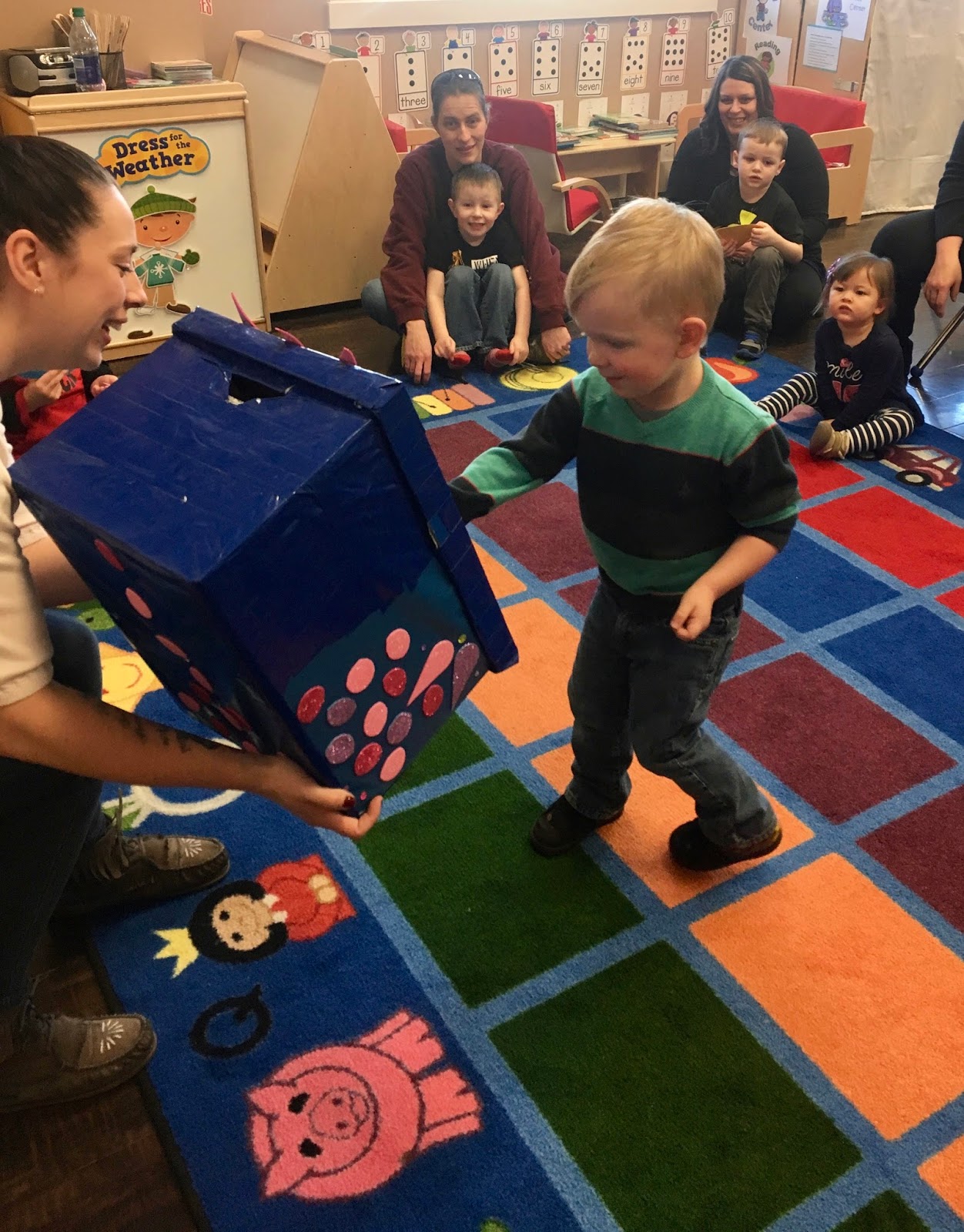
Parents are a child’s earliest and most influential teacher, so we thought, why not start there? It was simple:  invite parents to bring their little ones and stay...to play! And they did!


We asked parents what they wanted to get out of these sessions and we heard a resounding...."Let’s get them ready for preschool; teach them to share, take turns and follow directions and a daily routine!" " And how about some colors, and numbers and shapes! Oh and don’t forget about fine motor skills and self-regulation!”

So, with the combination of a strong research based background and the valuable input from our parents, BELA staff designed the sessions to combine learning opportunities and playtime for parents with their child; while BELA staff model developmentally appropriate activities for parents, giving them the opportunity to participate, observe and engage in learning opportunities designed just for them.


This little afternoon pilot project has blossomed into a vibrant, fun, interactive program, rich in learning opportunities for the children, as well as their parents! With the unique opportunity of having the added comfort of their parent close by, these BELA littles had the opportunity to slowly dip their toes into pre-school life. As the weeks went by the staff noticed that the children's’ confidence grew and each and every child in their own way, adjusted to the daily routines, and began to adapt to the classroom environment and the expectations of their teachers. Our parents feel that they have increased their own learning regarding early childhood development; and feedback across the board indicates that the children's early learning skills have improved and that there has been significant progress in preschool preparedness. After observing the growth of these little people over the past few months, there’s no doubt in my mind that these future students will come back in September eager to listen and learn, and ready to fill buckets!

~Ashley Williams

** Catch one last session of Stay To Play before the school year is over! Details & Registration here: Stay To Play at BELA

Monday, October 17, 2016

Stay To Play....A New Program at BELA!

At BELA, we are inviting you to, Stay to Play, and learn together! “Children the world over, from those living with the most sophisticated families in big cities to those living in remote villages in developing countries, spend much time 'just playing.' Of course, only grown-ups would put the word 'just' in the previous sentence, implying that somehow play is an indulgence only the very young are entitled to and that nothing much is happening when children play.


Nothing could be further from reality, however,for a great deal happens when children are 'just playing.' They are developing skills and habits and attitudes that will stay with them throughout their lives. As they play they learn to cope with frustration, to continue to try to improve, to share with others, to give vocal expression to their thoughts and fantasies. They literally 'play for keeps.'” (Dr. Bettye M. Caldwell, Importance of Play In Early Childhood, 2016)

Research indicates that children learn best in an environment which allows them to explore, discover, and play…It is also closely tied to the development of cognitive, socio-emotional, and physical behaviors. (Jill Englebright Fox, Early Childhood News, 2016)


“If we are to save play, we must first understand its nature. Creative play is like a spring that bubbles up from deep within a child. It is refreshing and enlivening. It is a natural part of the make-up of every healthy child. The child’s love of learning is intimately linked with a zest for play. Whether children are working on new physical skills, social relations, or cognitive content, they approach life with a playful spirit…. But is it work or play? In childhood there is no distinction.

Adults are convinced that we need to “teach” young children. It is certainly true that we need to set an example in all kinds of activities. We also need to create appropriate spaces where children can play and learn, and we need to lend a helping hand- and at times even intervene when things are going wrong. But mostly we need to honor the innate capacity for learning that moves the limbs and fills the souls of every healthy young child”. The Nature of Play (Joan Almon, The Vital Role of Play in Early Childhood)

With this understanding, that play is vital to the healthy development and learning of children, we recognize, “Parents are the most important people in their children’s early lives. Children learn about the world and their place in it through their conversations, play activities, and routines with parents and families. Parents can also support children’s learning in out-of-home settings, such as childminding settings, crèches, playgroups, pre-schools, and primary schools. By working together parents and practitioners can enhance children’s learning and development.


Parenting involves giving children the care, education and attention they need to learn and develop. Parents provide children with their first learning experiences and they help ensure that children reach important developmental milestones such as sitting, walking, becoming toilet-trained, talking, cutting, doing up buttons, cycling, reading, and so on. As children go on to spend time in out-of-home settings parents continue to support their learning and development. This is more effective when parents complement children’s experiences in a particular setting. Likewise, learning is more meaningful when practitioners use information from parents about children’s interests, skills, abilities, and dispositions as a starting point for new experiences." (Building Partnerships Between Parents & Practitioners)

At BELA, we recognize and honour the important role that parents play in the early learning of their children. Kenneth Leithwood, well known Canadian educational researcher, and author, tells us we need to shift our focus from ‘how to get more parents into our schools, to how we can support them at home’. As we sought information regarding the importance of co-learning, capacity building, and efficacy for families, it became apparent that parents feel that learning through play is important for their children.

The Child Care Information Exchange (Oliver & Klugman) tell us “91% of parents believe play is an important contributor to their child’s development and well-being. Almost a quarter of them (21%) believe that their children enjoy less time to enjoy play than they did as a child.” However, “Nearly three fourths (72%) of parents believe early academic learning is important and over half strongly believe that academic success is essential for life success. These numbers suggest that parents will make choices- sometimes misguided- that they feel will promote school success.” Information such as this, indicates schools have an important role to play in supporting capacity building and the efficacy of parents to support their child’s learning, through an educational partnership between home and school.

At BELA, we are excited to offer our new program, “Stay to Play”, a partnership, designed to share collective knowledge and expertise; highlight individual family’s strengths and talents; and support families through the use of community strengths and assets; in order to support continuous learning by both families and school staff, that will in turn support continued high quality learning for children in our community.

We invite families in our community to bring children ages 2-5 and join us each week to Stay to Play!, where BELA staff and participants will share ideas, and model learning through play experiences, with the children and their family participants. We will be offering 2 sessions of this 10 week program. Stay To Play is Tuesday afternoons from 1:30-3:30 , is open to children ages 2-5 and is offered free of charge via BELA and our community partners BCIS & the Medicine Hat & District Child Care Association. All the information including eligibility and registration for the program is on our website. Just follow the link to learn more and get registered: Stay To Play
~Jody Rutherford
Director of Education & Programming


Monday, April 13, 2015

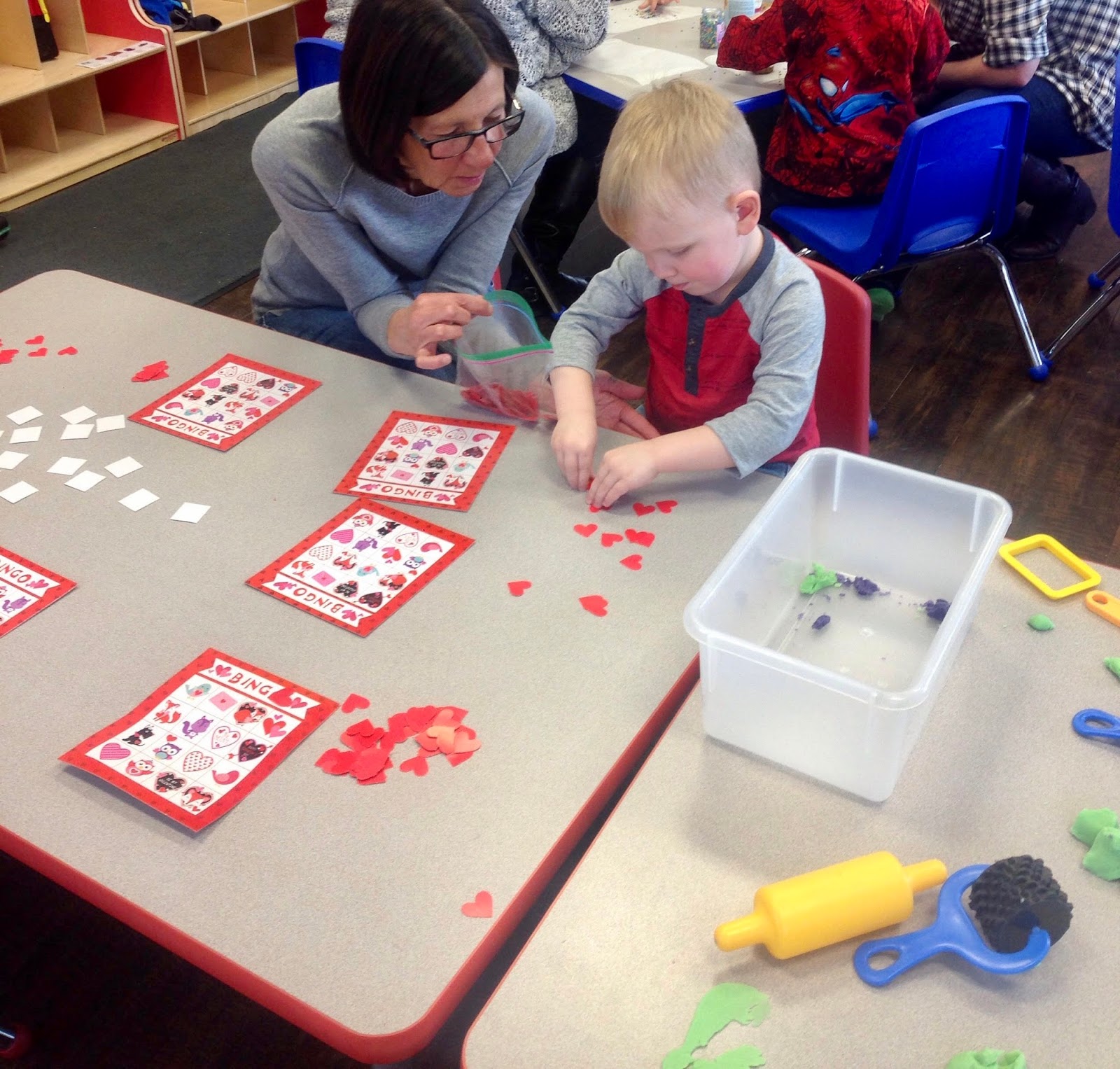
" Please Mom (Dad, Grandma, Grandpa) would you play with me?"


If we are lucky, we get to hear this request often, and should take it as a compliment!  Most children only ask people to play with them, who they think are fun to play with.  But parents, and grandparents, are often unsure what their role is when asked to play.  Are we there simply to keep them safe, as supervisor?  Do we act as a referee, to make sure everyone plays nicely?  Should we tell them what to do, and organize their play?  The answer to these questions is yes,  sometimes, all that & so much more!


Psychologists suggest that play is the ideal context for acquiring social skills & forming friendships.  Trawick-Smith, in the book, Interaction in the Classroom – How Do We Facilitate Play? describes three important types of play: make believe; group games; and outdoor motor play; all of which are important in the development of social skills and forming friendships.  The National Association for the Education of Young Children (1986) summarizes the benefits of play, “Knowledge is not something given to children as if they were empty vessels to be filled.  Children acquire knowledge about the physical and social world in which they live through playful interaction with objects and people.  Children do not need to be forced to learn; they are motivated by their own desire to make sense of their world (p.20)”.  

Trawick-Smith tells us there are developmental benefits to play:
·      stress reduction & reduction of anxiety
·      ideal context for acquiring social skills and forming friendships
·      important contributions to cognitive development & intellectual growth
·      problem solving ability
·      language development
·      creativity
·      healthy personality development
·      early reading skills


 So how do we capitalize on this natural desire of early learners, to play, learn, and make sense of their world?  There are 4 important times to play with children:
·      when a child doesn’t play; by playing with or around a child who doesn’t
interact with materials or peers, an adult can offer gentle invitations to participate, increase social contact, promote friendships and enhance social skills
·      when children need support; Yawkey, Smilansky et al (1987, 1968) found
 that it is not enough to simply provide more opportunities and materials to engage in social pretend play, only when adults joined in the play, were gains achieved in play and language development
·      when a teachable moment arises; when opportunities arise as children
 are learning a new concept, or are thinking about a problem in a new way, an adult may intervene and take advantage of the moment by adding new information to an exploration, give hints to help solve a problem, or ask questions to guide thinking.
·      when a child invites you to play; an adult who joins in the play has the
opportunity to learn more about a child’s social competence, their anxieties, concerns, or interests.  It is during play that children show us what they know, and how they think.


So the answer to the question about how we can enhance and extend the play of our children, is to see ‘play’ as their ‘work’, and be present.  Be present, to watch and observe, to invite or join in, ask questions, make suggestions, share in their joy and celebrate their eagerness to grow and learn. 
Anita Wadley’s poem “Just Playing” provides a wonderful reminder of the importance of play!

‘When you ask me what I did today,
And I say, “I JUST Played”,
Please don’t misunderstand me.
For, you see, I’m learning as I play.
I’m learning to enjoy and be successful in work.
I’m preparing for tomorrow.
Today, I’m a child and my work is play’


In response to questions from parents at BELA , our staff  have devoted our Professional Learning time this year to learning more about effectively facilitating play.  April 20 @ 1:00- 2:30, Ms. Flynn and Mrs. Parenas will be offering a workshop for parents designed to provide information about facilitating play, and opportunities to practice different ways to facilitate play with your own child. Please join us!

- JR
Jody Rutherford
Director of Education & Programming